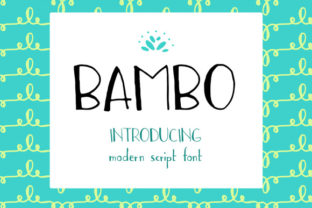
Bambo: A Hand-Drawn Sans Serif for Modern Web Design
When selecting Fonts for a digital project that requires both personality and clarity, Bambo stands out as a unique solution for contemporary interfaces. Created by Silvia Porcu, this typeface bridges the gap between the organic feel of handwriting and the structural reliability of a Sans Serif family. For web designers and UI creators, the challenge often lies in finding a display font that captures attention in hero sections without sacrificing the clean lines necessary for responsive layouts. Bambo answers this need by offering a fine hand-drawn aesthetic that feels approachable yet professional, making it an ideal candidate for brands looking to humanize their online presence while maintaining a modern edge.
Enhancing Visual Hierarchy with Bambo in Hero Sections
Incorporating Bambo into your website's hero section immediately establishes a distinct tone that standard system fonts cannot replicate. As a hand-drawn Sans Serif, it provides enough visual weight to serve as a primary headline while retaining the openness required for quick scanning on desktop and mobile devices. When used in large sizes, the subtle irregularities in the stroke width add a layer of texture that breaks up the rigidity of grid-based designs. This makes Bambo particularly effective for landing pages where the goal is to stop the scroll and engage the user within seconds. By pairing this distinctive Fonts choice with ample white space, you create a focal point that guides the eye naturally toward call-to-action buttons or key value propositions.
Optimizing Readability for Mobile and Responsive Layouts
While decorative typography often fails on smaller screens, Bambo maintains its legibility due to its underlying Sans Serif structure. The open counters and consistent x-height ensure that even at reduced sizes, the characters remain distinct and readable on smartphones and tablets. For digital product creators, this means you can confidently use Bambo for subheadings, navigation labels, or short instructional text without worrying about pixelation or blurring. When designing responsive layouts, it is crucial to test how hand-drawn Fonts render across different browsers; Bambo's clean lines translate well into webfont formats, ensuring a consistent experience for all users regardless of their device. To maximize readability, consider increasing line height slightly when using this typeface for multi-line headers to prevent the organic strokes from feeling too crowded.
Building Brand Identity with Bambo for Online Stores
E-commerce sites often struggle to convey warmth and trust through purely geometric typography, but Bambo offers a compelling alternative for boutique online stores and artisanal brands. Using this Sans Serif in banner graphics, product category titles, or promotional badges injects a sense of craftsmanship that aligns perfectly with handmade or curated goods. The hand-drawn nature of Bambo suggests a human touch, which can significantly increase conversion rates by making the brand feel more accessible and less corporate. When integrating these Fonts into an online shop, limit their use to high-impact areas like sale announcements or featured collection headers to maintain a balanced visual hierarchy. This strategic application ensures that the unique character of Bambo enhances the shopping experience rather than overwhelming the product imagery.
Effective Font Pairing Strategies for Digital Products
To create a cohesive design system, pairing Bambo with a neutral body font is essential for maintaining professional standards in long-form content. Since Bambo acts as a expressive display face, it works best when contrasted with a simple, geometric Sans Serif for paragraph text, ensuring that the reader's focus remains on the content rather than the typography. For editorial-style blogs or course sales pages, you might also experiment by pairing it with a classic serif font to evoke a more sophisticated, magazine-like atmosphere. The versatility of Fonts like Bambo allows designers to mix styles without creating visual chaos, provided the contrast in weight and style is clear. When building a brand kit, define specific rules for where Bambo appears versus your secondary typeface to ensure consistency across all digital touchpoints, from email newsletters to social media graphics.
Leveraging Bambo for Conversion-Focused Call-to-Action Areas
The psychological impact of typography plays a significant role in user engagement, and Bambo can be a powerful tool for softening the aggressiveness of traditional marketing copy. Using this hand-drawn Sans Serif for button text or limited-time offer headers can make a call-to-action feel more like an invitation than a command. This subtle shift in tone is particularly effective for coaching websites, creative portfolios, and service-based landing pages where building rapport is as important as driving clicks. When applying Bambo to interactive elements, ensure there is sufficient padding around the text to accommodate the irregular shapes of the letters, preventing any visual clipping on hover states. By thoughtfully deploying these Fonts in conversion zones, you create a user interface that feels intuitive and friendly, encouraging visitors to take the next step in their journey.
Technical Considerations for Web Implementation and Licensing
Before finalizing your design, it is important to verify the technical specifications and licensing terms associated with Bambo to ensure smooth deployment across your projects. As a premium typeface, Bambo typically comes in web-ready formats such as WOFF and WOFF2, which are optimized for fast loading times and crisp rendering on high-DPI screens. When purchasing Fonts for client work or commercial products, always check whether the license covers pageview limits, domain usage, and embedding in digital templates or apps. Proper licensing protects your business and ensures that your use of Sans Serif assets like Bambo remains compliant with the creator's terms. Additionally, review the character set to confirm support for the languages your audience speaks, as multilingual support is critical for global brands aiming to maintain a consistent identity across different regions.